How We Created an Active Play Corner for Kids
One of the biggest goals for our playroom was creating a space that encouraged movement.
Our kids have always loved climbing, swinging, and hanging, so instead of filling the room with more toys, we decided to dedicate one corner to active play.
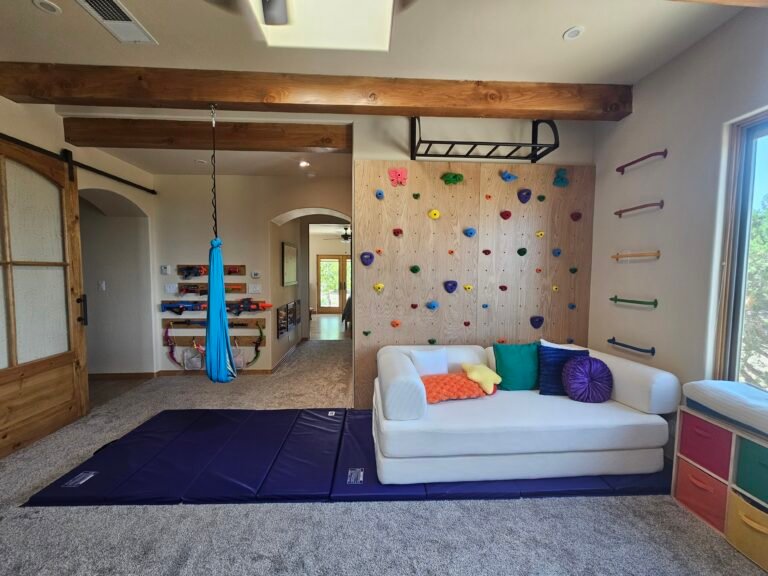
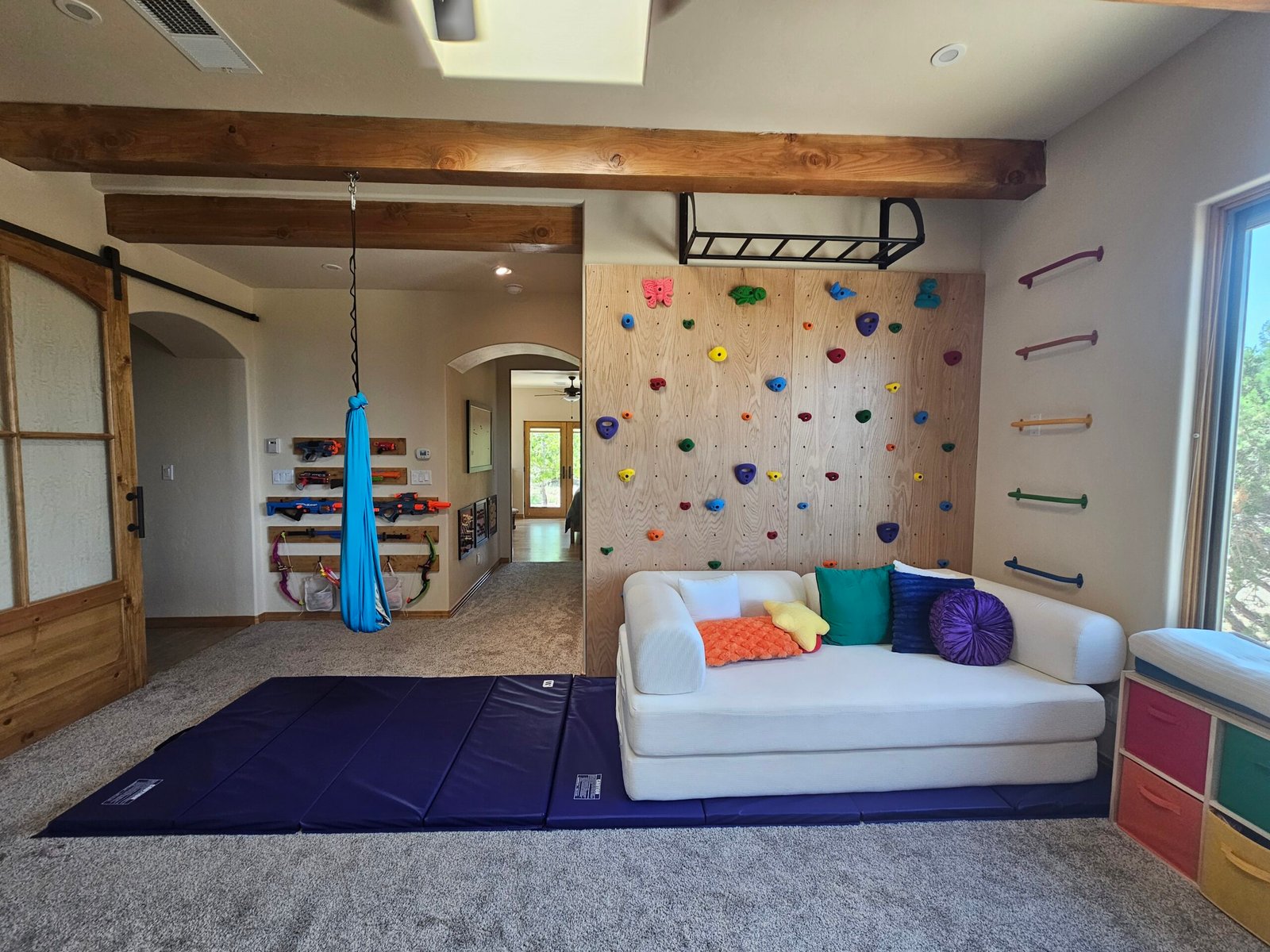
Rather than stopping with a climbing wall, we gradually added monkey bars, gymnastic rings, a crash mat, and flexible seating to create a space that encourages movement in lots of different ways.
It has become one of the most-used areas of our playroom.
Why We Built It
I wanted this area to encourage movement while still fitting naturally with the rest of the room.
Instead of looking like a home gym, I wanted it to feel like part of the playroom.
Using natural wood, rainbow colors, and coordinated finishes helped the active corner blend with the rest of the space.
Starting with the Climbing Wall
Everything else grew out of the climbing wall.
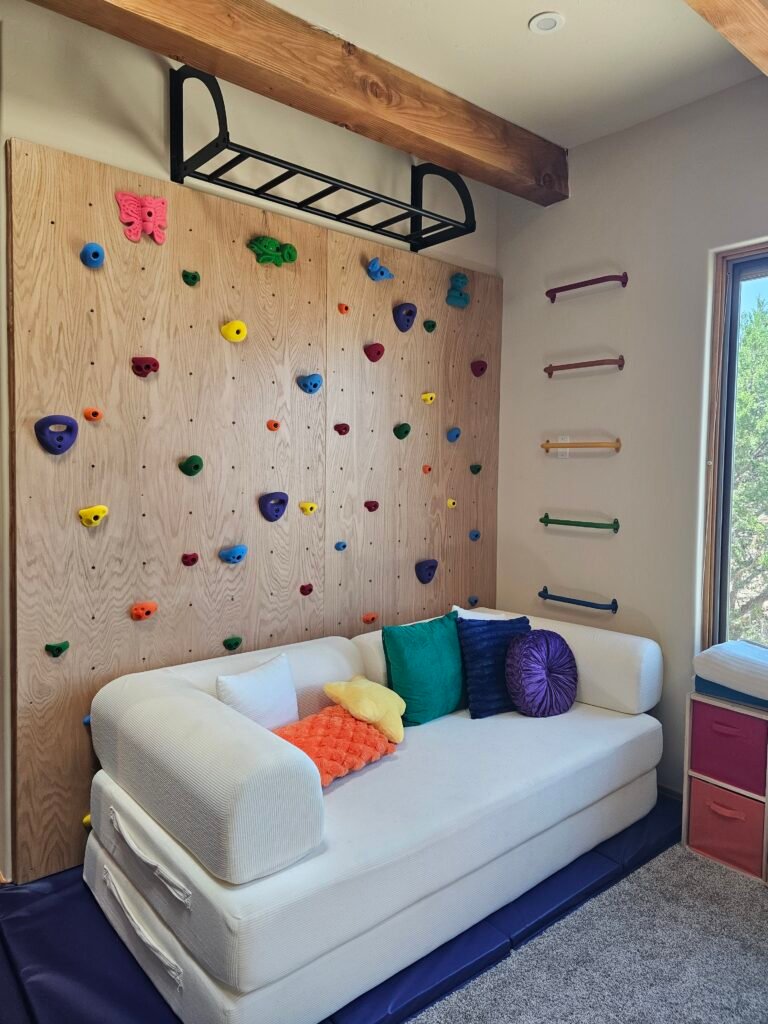
The climbing wall became the anchor for the entire corner and gave the kids a place to climb vertically while creating routes that could change over time.
Rather than repeating all of the construction details here, I’ve written a separate tutorial showing exactly how we built it.
→ Read the full climbing wall tutorial here.
Indoor Swing
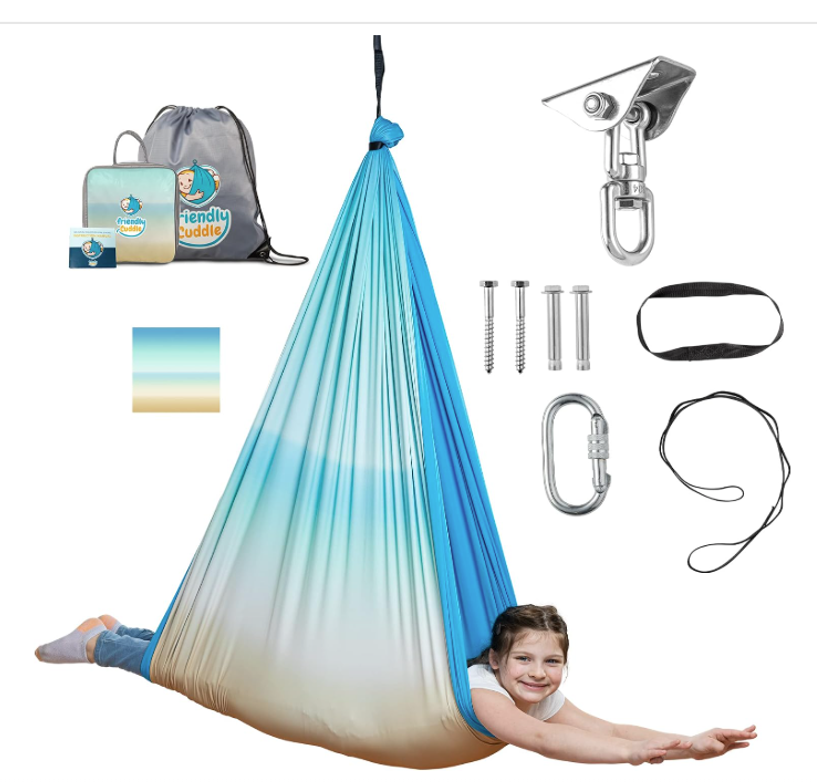
Actually, the very first thing we installed (before the climbing wall was even on the horizon!) was an indoor fabric swing. To be honest with you, this swing is the single most used piece in the entire play room. The kids love to play actively on it, but also use it for more restful swinging or sitting. It gets used every single day. If you don’t have space for anything else but can fit a swing like this I highly recommend it.
One note of caution: we initially installed it from the truss, but after consulting with an engineer, we realized trusses aren’t designed to support a vertical load from a center point. We were able to (luckily) move it to the wood beam which was structurally sound.
Adding Horizontal Monkey Bars
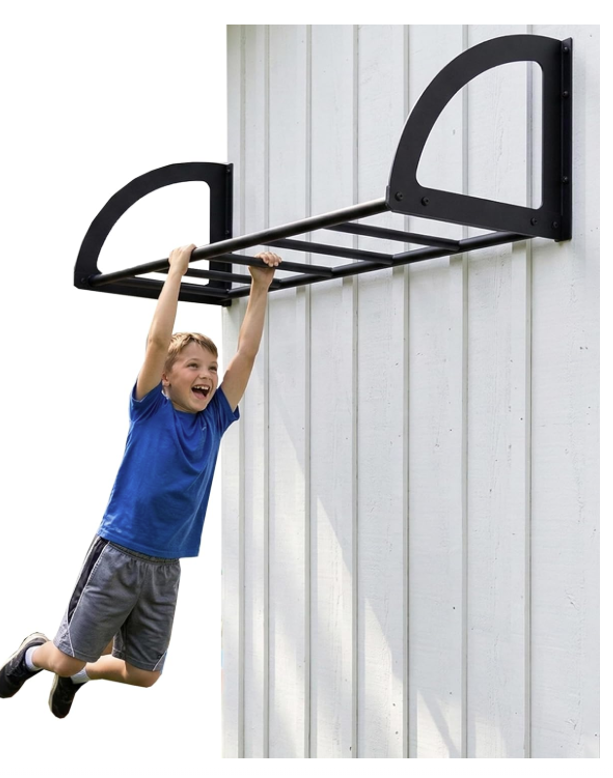
Once the climbing wall was finished, we realized the kids wanted another way to move through the space.
Adding horizontal monkey bars gave them a completely different challenge.
Instead of climbing upward, they could work on swinging, traversing, grip strength, and upper-body coordination.
It also created another activity that siblings could enjoy while someone else was using the climbing wall.
Why We Added Vertical Monkey Bars
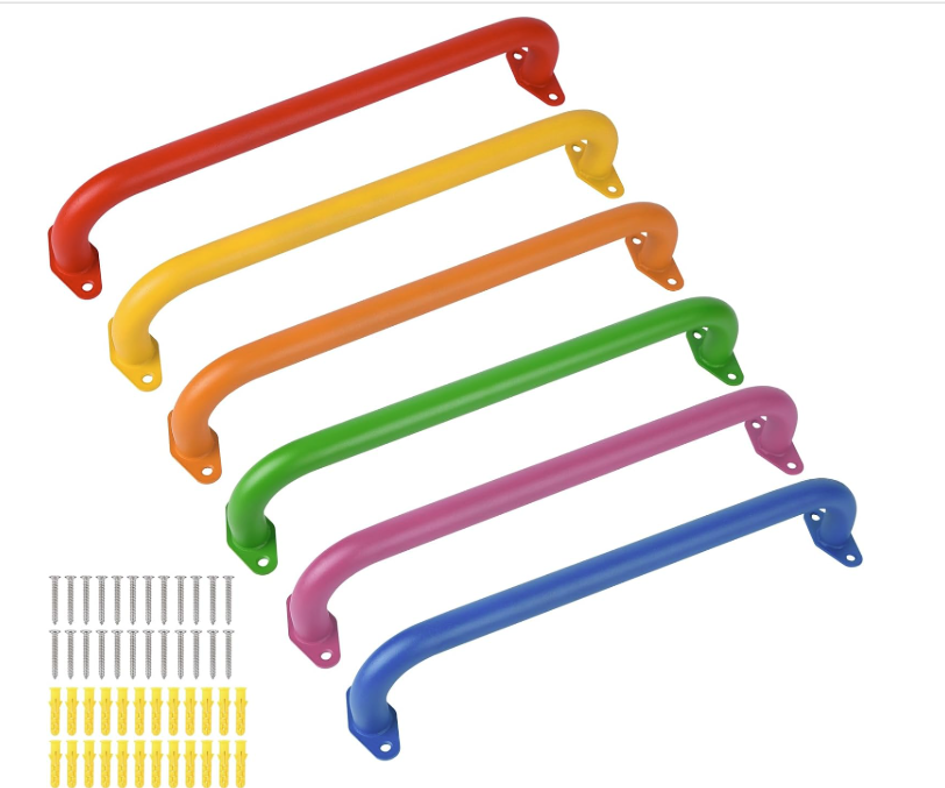
The vertical monkey bars ended up serving a different purpose.
Rather than replacing the climbing wall, they created another way to move between activities while adding a different type of climbing challenge.
Because they sit next to the climbing wall, they make the entire corner feel connected instead of like several separate pieces of equipment.
One thing I really like is that the kids naturally invent different ways to use them, many of which I never would have anticipated.
Choosing a Safety Mat
With climbing and monkey bars came another important decision: what should go underneath them?
We wanted enough padding to make the area safer while still keeping the room looking inviting.
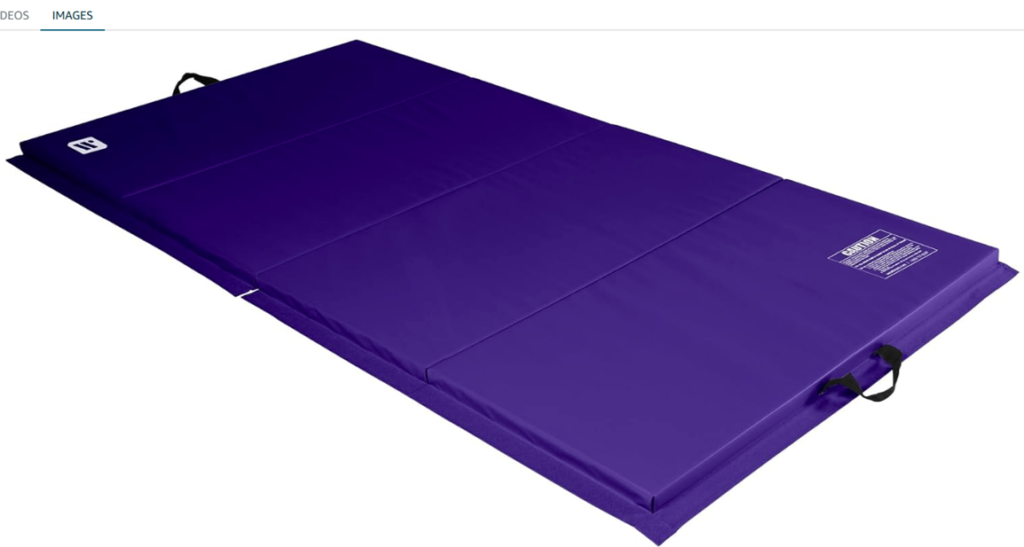
We ultimately chose folding gymnastics mats because they provided a generous landing area while remaining much more affordable than custom climbing mats.
We went with these particular mats because we were able to get them in a 4’x8′ and a 4’x6′ size, which when Velcroed together, was the perfect size to provide padding under the climbing wall and the indoor swing.
→ Read more about how we chose our safety mat here.
Flexible Seating
One thing we didn’t anticipate was how often the kids wanted to sit nearby while someone else was climbing.
Adding a modular couch gave them a place to watch, read, build forts, or simply relax.
It also added another layer of soft seating next to the active play area, making the corner feel more welcoming for the entire family.
And, of course, I couldn’t help myself – I had to add the rainbow colored pillows to the couch. I was pleasantly surprised at how much that tied in the rainbow colors. (The key here was to make sure I found pillows with a variety of shapes and textures).
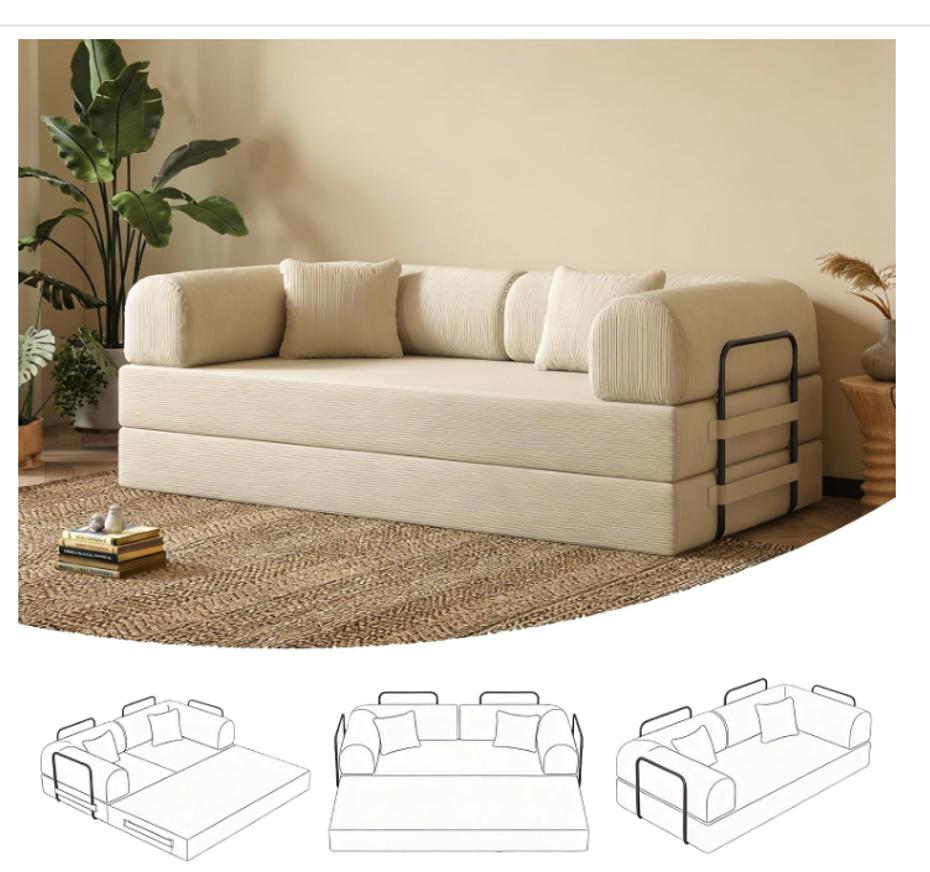
→ Read why we chose the Boneless couch here.
Why This Layout Works
Looking back, I think this corner works because it offers lots of different ways to move.
The climbing wall and horizontal monkey bars build grip strength and coordination.
The vertical monkey bars introduce another climbing challenge.
The mats create a comfortable landing area.
The couch gives kids a place to rest, watch, or read, as well as additional padding.
Rather than one piece of equipment, the entire corner functions as a flexible movement space.
Finished Active Corner
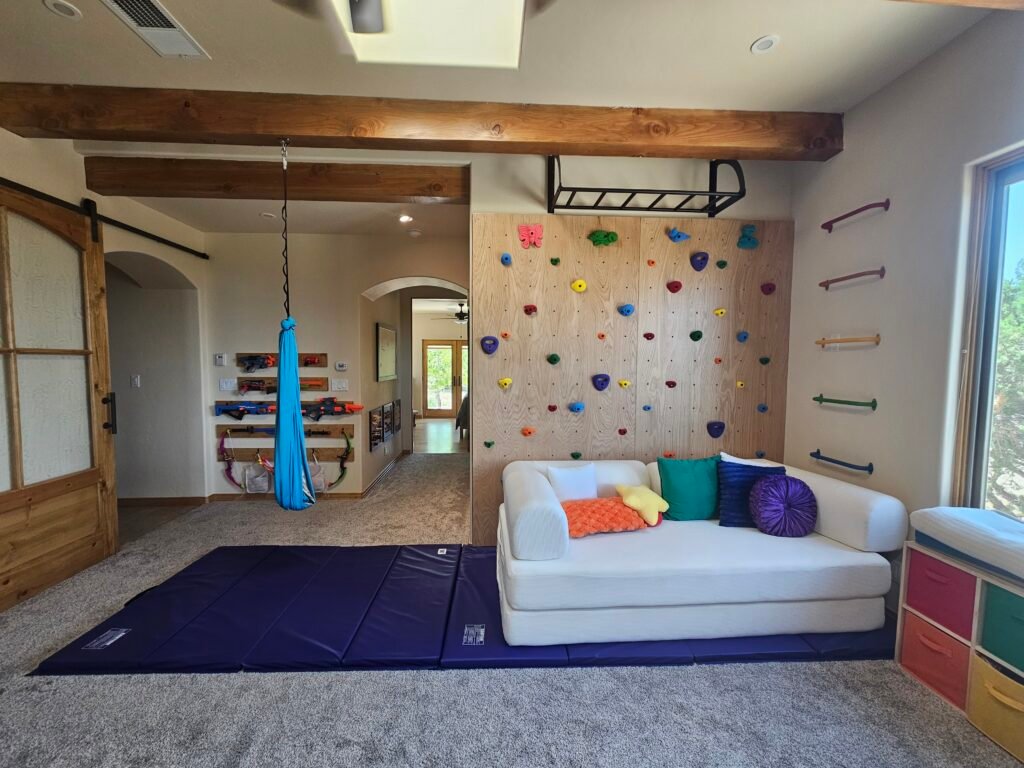
This has become one of the most popular areas in our playroom.
The kids rarely use just one piece of equipment—they naturally move from climbing, to swinging, to hanging, and then settle onto the couch before starting all over again.
Watching them invent new games has been one of my favorite parts of the project.
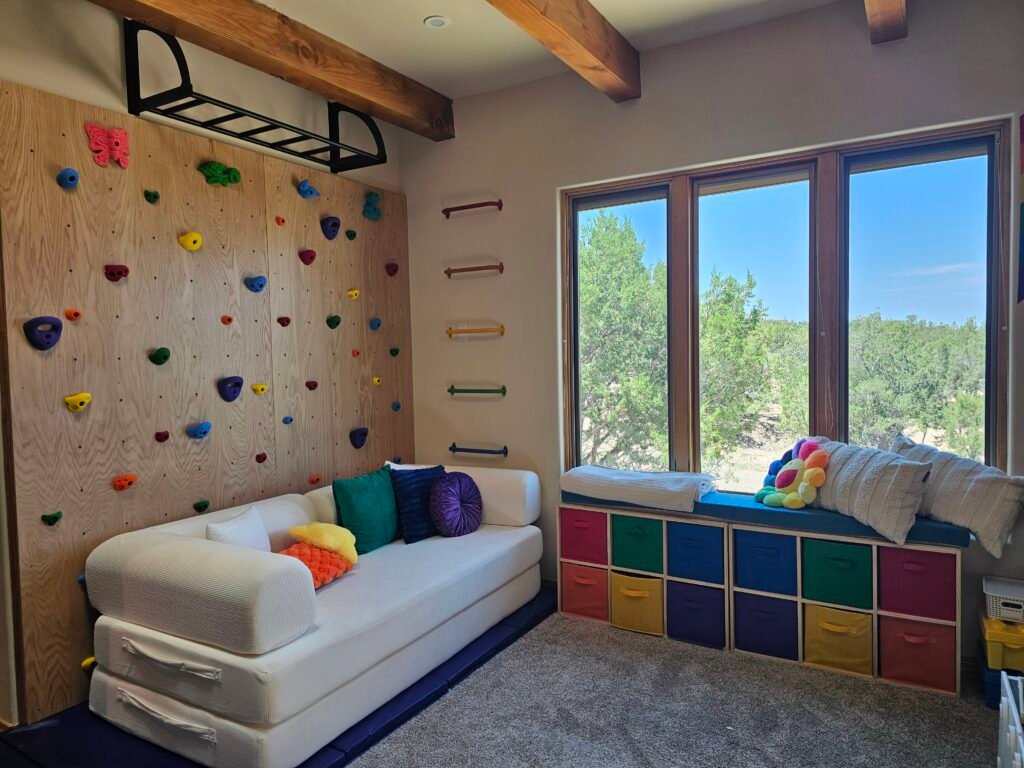
Lessons Learned
- Think about how different pieces of equipment work together.
- Leave enough open floor space for movement.
- Natural wood and coordinated finishes help active play equipment blend into your home.
- Kids often invent better ways to use the space than you originally planned.
What I’d Do Differently
Honestly, not much! This corner came together really well. It’s one of the most frequently used areas in the play room. If I could do it over again I would start out by consulting with an engineer about the indoor swing to prevent having to move it.
Related Projects
- DIY Indoor Climbing Wall
- Choosing a Safety Mat for an Indoor Climbing Wall
- Why We Chose a Boneless Couch
- Adventure Playroom Reveal